How To Paint A Surfboard with Surfpaints
Short answer: To paint a surfboard with paint pens, follow six steps: remove the wax, clean the board, lightly sand the area with 180–240 grit, plan your design, paint with water-based acrylic paint pens, then seal it with at least three coats of clear acrylic spray varnish. Most people use 4mm bullet-tip pens for linework and fills, 1mm pens for fine detail, and 15mm jumbo pens for big blocks of colour.
Surfpaints began on surfboards in Australia, and this is the method we've used and refined on our own boards for years. You don't need to be an artist. You just need a clean, sanded board and a bit of patience on the sealing step.
Want everything in one box? See the Studio Kit →
What do you need to paint a surfboard?
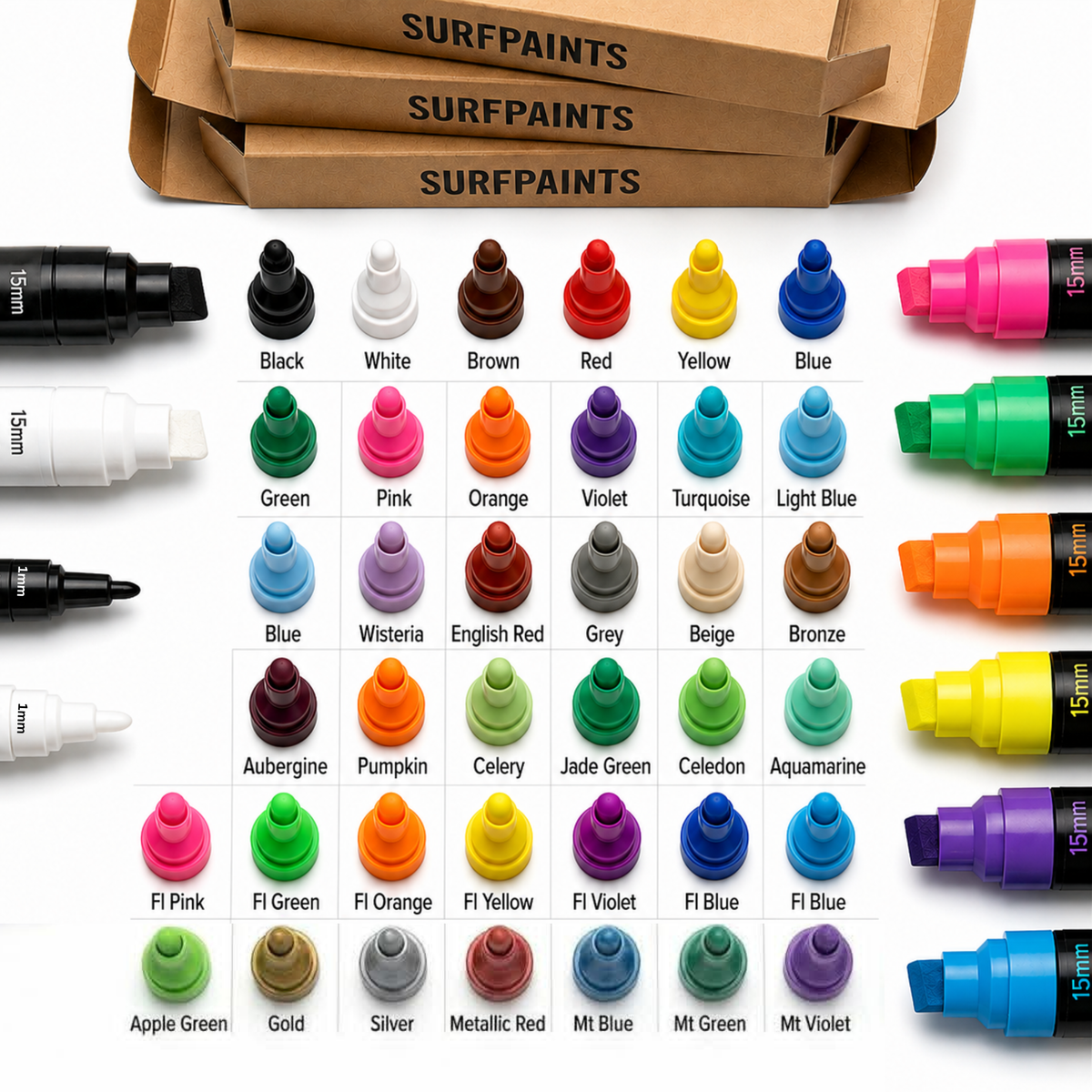
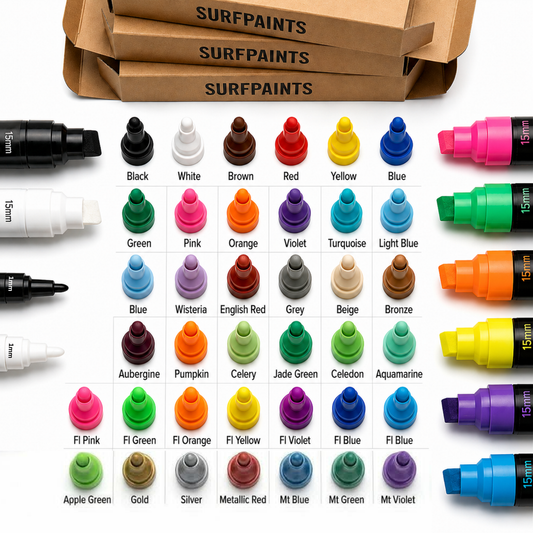
- Paint pens. An 8 pack of 4mm pens (A$59.99) is enough for a simple design. The 36-Colour Set (A$199.99) gives you the full range.
- A wax comb or scraper to get the wax off.
- Fine steel wool to remove the last bits of wax and grease.
- 180–240 grit sandpaper or a sanding block.
- A pencil and masking tape to plan your design.
- Clear acrylic spray varnish to seal it. Use acrylic, not enamel.
The Studio Kit (A$229.99) includes 36 × 4mm pens plus a storage case, scraper, scuff pad, pencil, masking tape, water brush and 10 spare nibs. If you already have pens, the Storage Case (A$120) comes with the same accessories.
Step 1: How do you get wax off a surfboard?
Scrape the wax off with a sturdy wax comb or scraper. If the wax is old and thick, or you live somewhere cold, leave the board wax-side up in direct sun for 3–5 minutes so the wax softens. A hairdryer on warm also works. If your board is brand new, skip to step 2.
Step 2: How do you clean a surfboard before painting?
Rub the whole area you'll paint with fine-grade steel wool until there's no visible wax, grease or dirt left. Do this even on a new board, because new boards pick up finger marks and dust in transport and storage.
Step 3: Do you need to sand a surfboard before using paint pens?
Yes. A light sand gives the paint something to grip, and skipping it is the most common reason surfboard art peels or looks streaky. Use 180–240 grit and sand in small circles until a fine white powder comes off. Then wipe the dust away with a dry rag or paper towel. That's the boring part done.
Step 4: How do you plan a surfboard design?
Keep it simple. Find a design you like, then sketch it lightly in pencil or trace it onto the board. Our guide to transferring a design with tracing paper walks you through it. Mandalas, waves, lettering and line-art animals are popular first designs. Some people just start painting, and that's fine too. Water-based paint on a fibreglass board can be wiped or rubbed off before it's sealed (see "What if I make a mistake?" below).
Want to practise first? The Bamboo Mini Surfboard (30cm, pre-primed, A$29.99) is a good way to try a design before you paint your real board.
Step 5: How do you use paint pens on a surfboard?
- Shake the pen well with the cap on, so the mixing ball moves the paint around.
- Prime it on scrap paper. Press the nib down a few times until paint flows into the tip. Never prime on your board.
- Test a line on paper. Once it's flowing cleanly, move to the board.
- Work light to dark and let each colour dry before you paint over it.
- Re-prime on paper if the flow slows down.
- Cap the pen as soon as you finish with a colour, so the nib doesn't dry out.
Which tip to use where:
| Tip | Best for on a board | Where to get it |
|---|---|---|
| 1mm extra fine | Outlines, small detail, signatures | Individual 1mm pens (white; black when back in stock), Fine Tip Pack, 4 × white |
| 4mm bullet | Linework, lettering, filling shapes | All 8 packs and the 36-Colour Set |
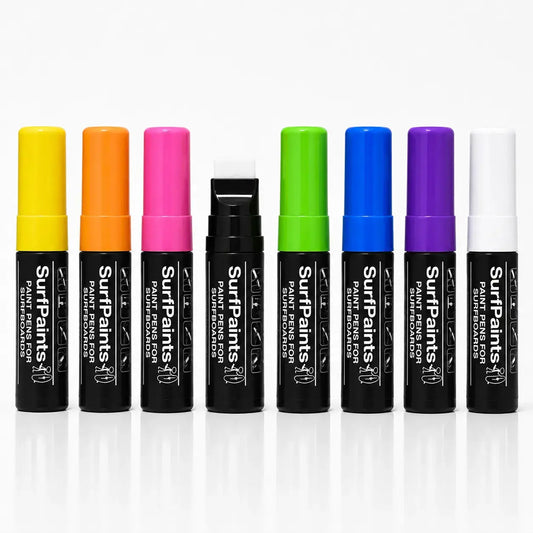
| 15mm jumbo | Big blocks of colour, rails, backgrounds | Fluro 15mm Jumbo 8 Pack |
Need a different nib? Replacement 4mm bullet and chisel nibs fit all 4mm Surfpaints pens.
Step 6: How do you seal paint pen art on a surfboard?
Don't skip this step. On fibreglass and other non-porous surfaces, water-based paint can rub off until it's sealed. Too few coats, or the wrong spray, are the most common reasons surfboard art comes off.
- Use a clear acrylic spray varnish. Avoid enamel and other oil-based clears, which can crack the paint and yellow the board.
- Spray two light coats, leaving about 10 minutes between them.
- Finish with a third, heavier coat, using smooth, even passes.
- Leave it for 24 hours to set.
- Check it: run your fingers lightly over the art. If anything smudges, touch up the paint and re-spray that area.
Always follow the instructions on your varnish can. Spray outdoors, in a well-ventilated area, and wear a mask. Our guide to sealing paint pen art has more detail.
What if I make a mistake?
- Wet paint: wipe it straight off with a rag or paper towel. If a faint smudge is left, give it a light rub with steel wool.
- Dry paint (not yet sealed): rub it back gently with steel wool.
- Small slip: often the easiest fix is to let it dry and paint over it.
- Already sealed: sand back the clear coat and paint with 120–180 grit.
There's more in our guide to removing paint pen from a board.
Can you paint a soft-top surfboard or bodyboard?
You can paint the slick plastic underside of a soft-top or bodyboard and seal it with clear acrylic spray, following the steps above. We don't recommend painting the foam top deck. After a couple of years of trials, we found the pens go on smoothly, but the foam flexes when you press on it. That cracks the clear coat, so the art eventually comes off in the water.
Do paint pens work on epoxy and PU surfboards?
Yes. Water-based acrylic paint pens work on both polyurethane (PU/polyester) and epoxy boards, because you're painting the hard outer glass layer, not the foam. Both need the same prep: no wax, no grease, and a light sand so the paint can grip the glossy finish. On boards with a gloss coat, sanding is the step that matters most.
What causes common surfboard painting problems?
| Problem | Likely cause | Fix |
|---|---|---|
| Streaky, patchy colour | Wax or grease left on the board, or no sanding | Clean with steel wool, sand with 180–240 grit, then apply a second thin coat once the first is dry |
| Paint beads up or won't stick | Wax residue | Remove the paint, clean again and re-sand |
| Blobs and drips | Pen over-primed or pressed hard on the board | Prime on scrap paper, use light strokes, and wipe wet blobs off straight away |
| Colours bleed into each other | Painting over wet paint | Let each colour dry before you paint next to or over it |
| Art smudges after spraying | Clear coat applied too heavy or too soon | Start with light mist coats and give the paint time to dry first |
| Pen stops flowing | Paint has settled, or the nib has dried | Shake well with the cap on, then re-prime on paper. See how to restart a pen |
Frequently asked questions
What are the best paint pens for surfboards?
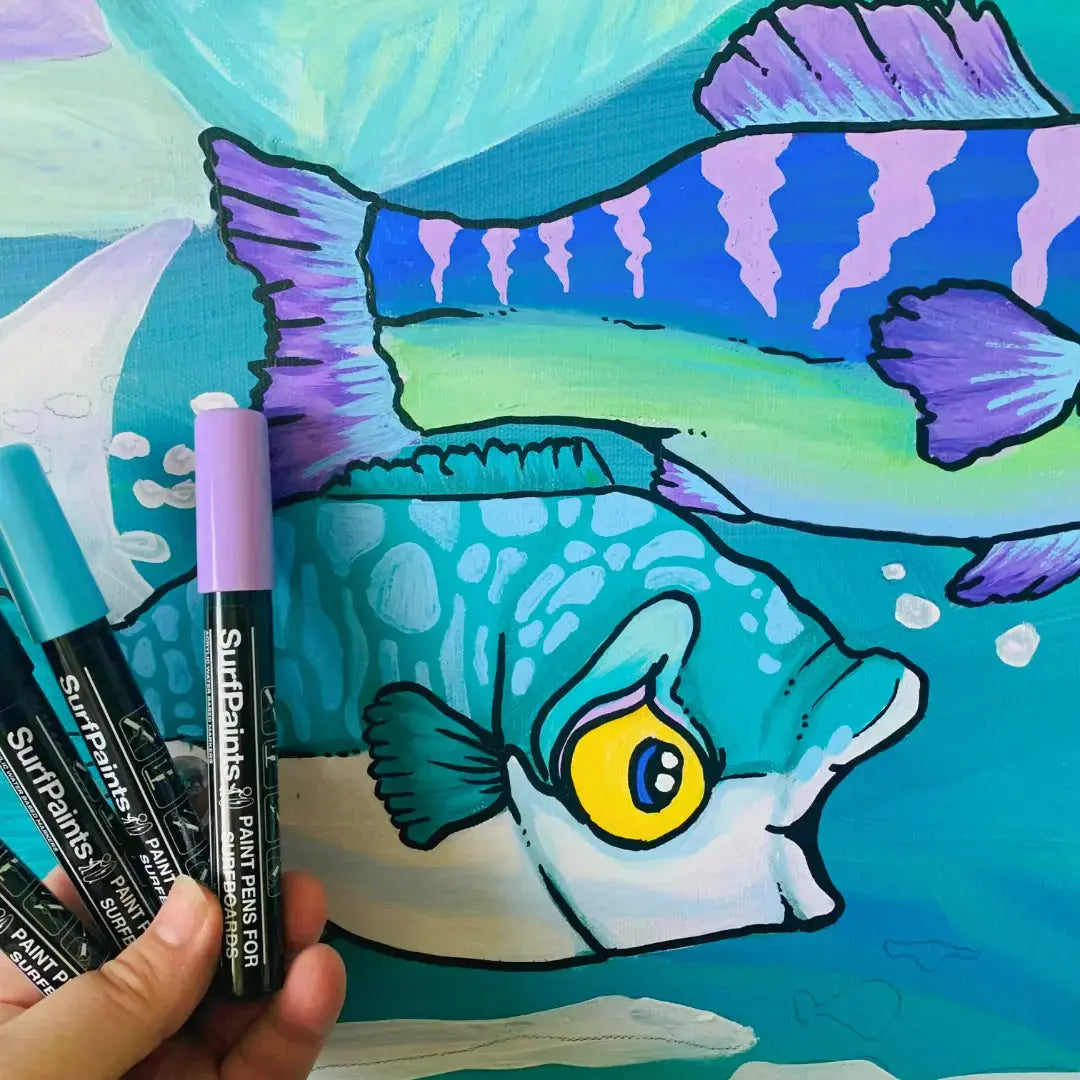
Use water-based acrylic paint pens with a range of tip sizes: 4mm for most of the work, 1mm for detail and 15mm for large areas. Then seal with clear acrylic spray. Surfpaints were developed for exactly this job. Start with an 8 pack or go all-in with the 36-Colour Set.
Can you use paint pens on a surfboard without sanding?
We don't recommend it. Sanding lightly with 180–240 grit gives the paint something to grip. Unsanded boards are the most common cause of peeling and streaks.
Can I paint over an old surfboard design?
Yes. Remove the wax, clean the board, and sand it lightly first. Then plan your design to work with or over the existing graphics.
How long does surfboard paint pen art take to dry?
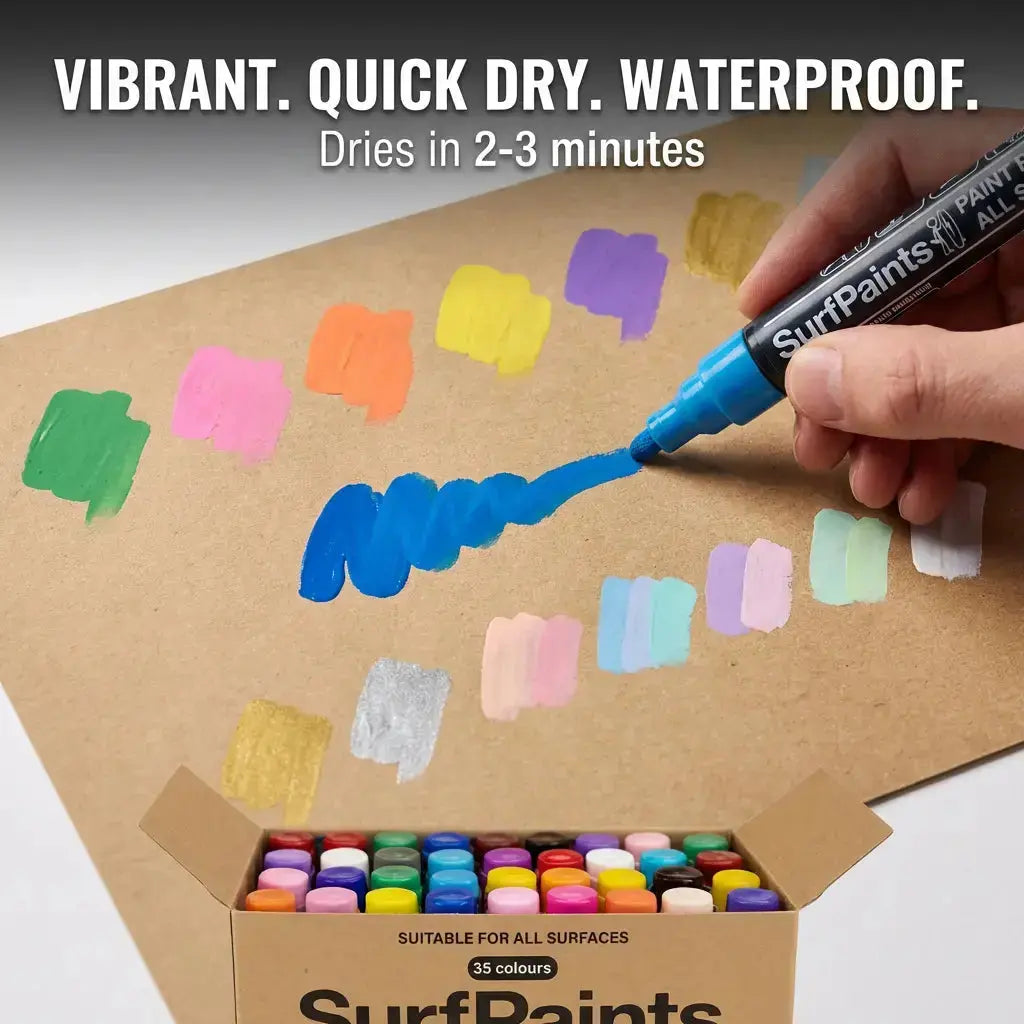
Paint pen colour is usually touch-dry within minutes. Let the whole design dry completely before you varnish, then leave the clear coat 24 hours before you surf.
Can I paint a surfboard with kids?
Yes. Paint pens are much less messy than brushes and tins. An adult should do the sanding and the spray varnish.
Do you ship surfboard painting kits overseas?
Yes. We ship from Brookvale, NSW. Orders to the USA and Canada are sent with Australia Post and usually arrive in 4–8 business days.
Ready to paint your board? Grab the Studio Kit for every colour plus the prep tools, or browse all Surfpaints paint pens. Share your board on Instagram and tag @surfpaints.