Best Acrylic Paint Markers for Canvas: Tips, Techniques and Which Pens to Use
Short answer: Acrylic paint markers suit canvas well. Use them for detail, outlines, highlights and lettering, either straight onto primed canvas or over dry acrylic paint. A 4mm bullet tip covers most work, a 1mm tip handles fine lines, and a 15mm tip fills big areas fast. Prime the canvas first, build colour in thin layers, and varnish when you're finished.
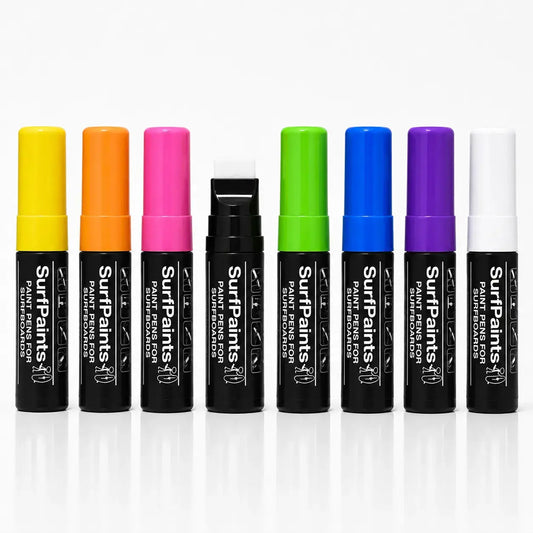
Paint pens give you the colour of acrylic paint with the control of a pen. You don't need to mix colours, wash brushes or worry about drips. Here's how artists use Surfpaints on canvas, and which pens to choose.
Can you use acrylic paint markers on canvas?
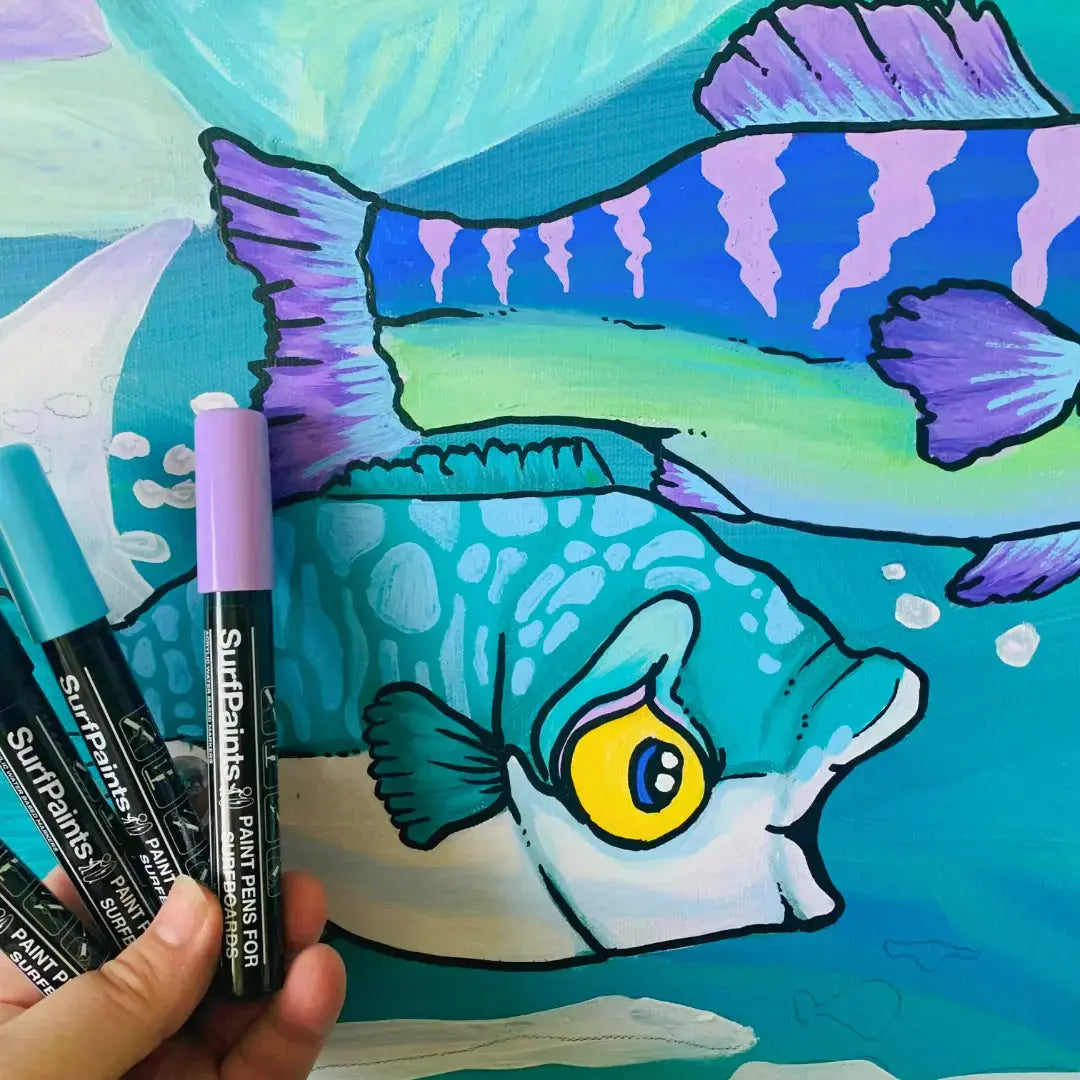
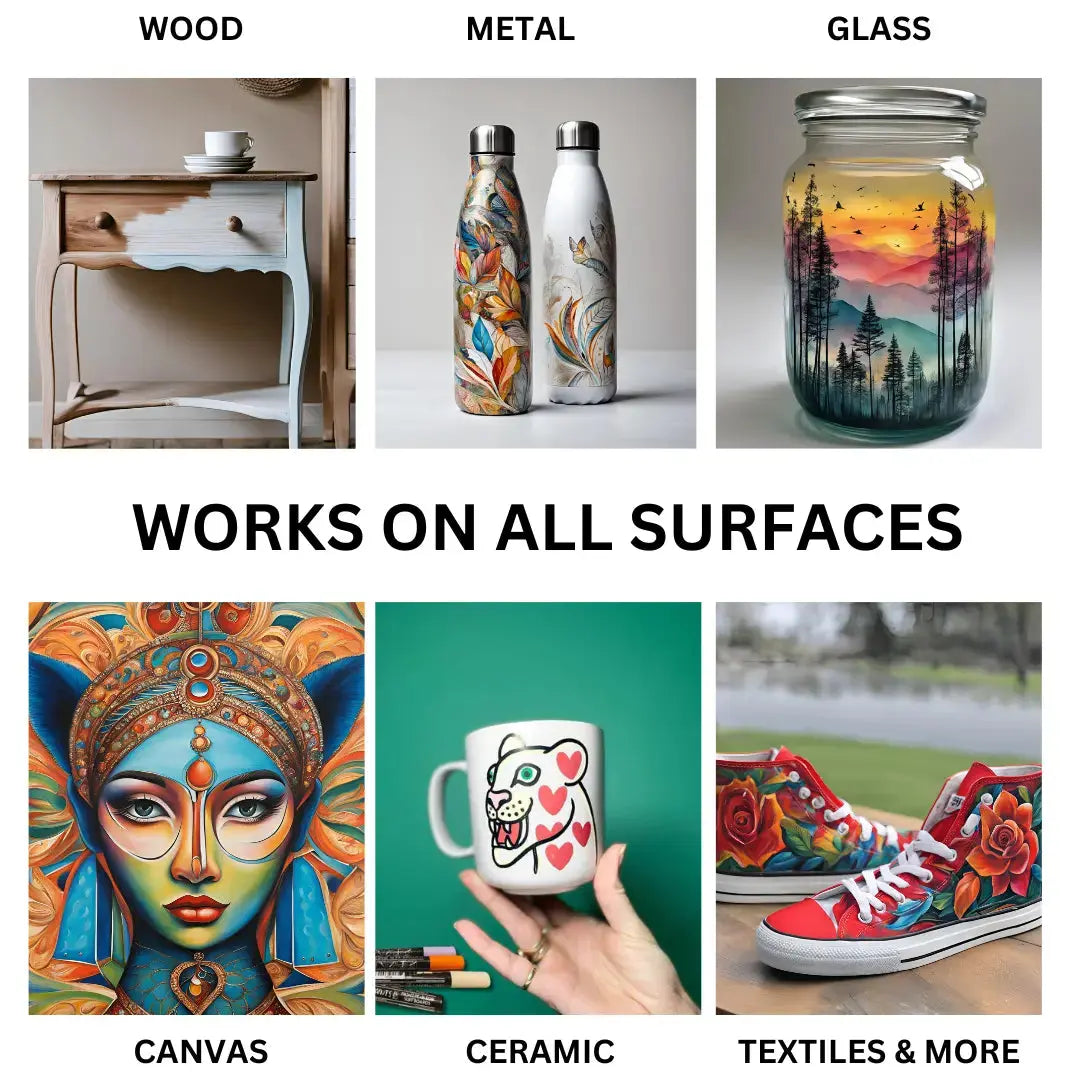
Yes. Acrylic paint markers use the same kind of paint as tube acrylics, just inside a pen. They work on primed canvas, canvas board and canvas panels, and on top of dry acrylic paintings. They're a favourite for adding detail, crisp edges and highlights that would be hard to get with a brush.
"These pens are amazing. Exactly what I needed to make my paintings pop. I have been using them to paint in all the finer details of a series I'm doing showcasing the heritage houses on Launceston. They are clear, bright, reliable and I love the interchangeable nib allowing me to change the thickness of the line. Highly recommend them."
— Sandra Astill, 36-Colour Set
Which paint marker tip size is best for canvas?
| Tip | Use it for | Surfpaints option |
|---|---|---|
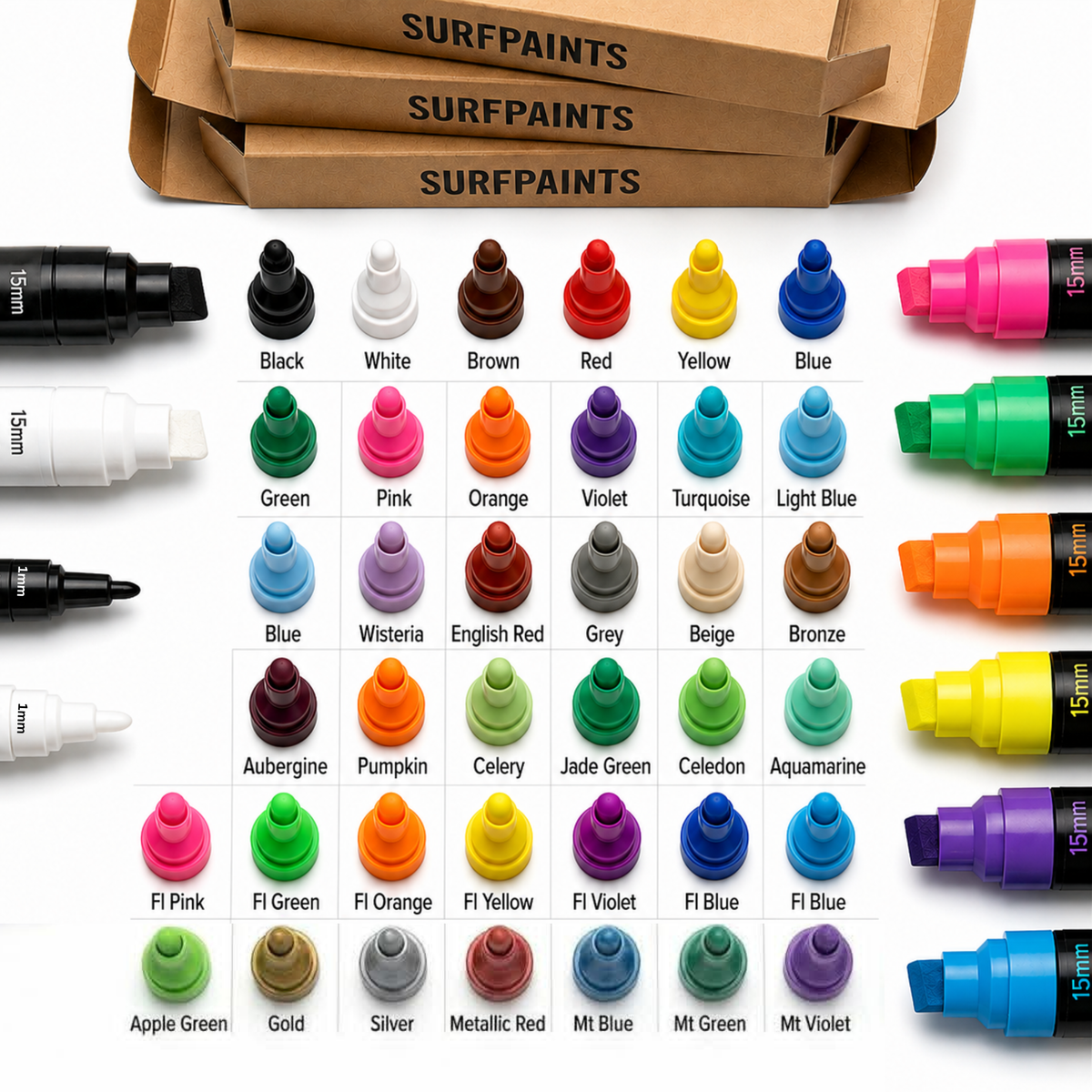
| 1mm extra fine | Fine outlines, hair, eyelashes, signatures, tiny highlights | Individual 1mm pens (white; black when back in stock), Fine Tip Pack, 4 × white, A$40 |
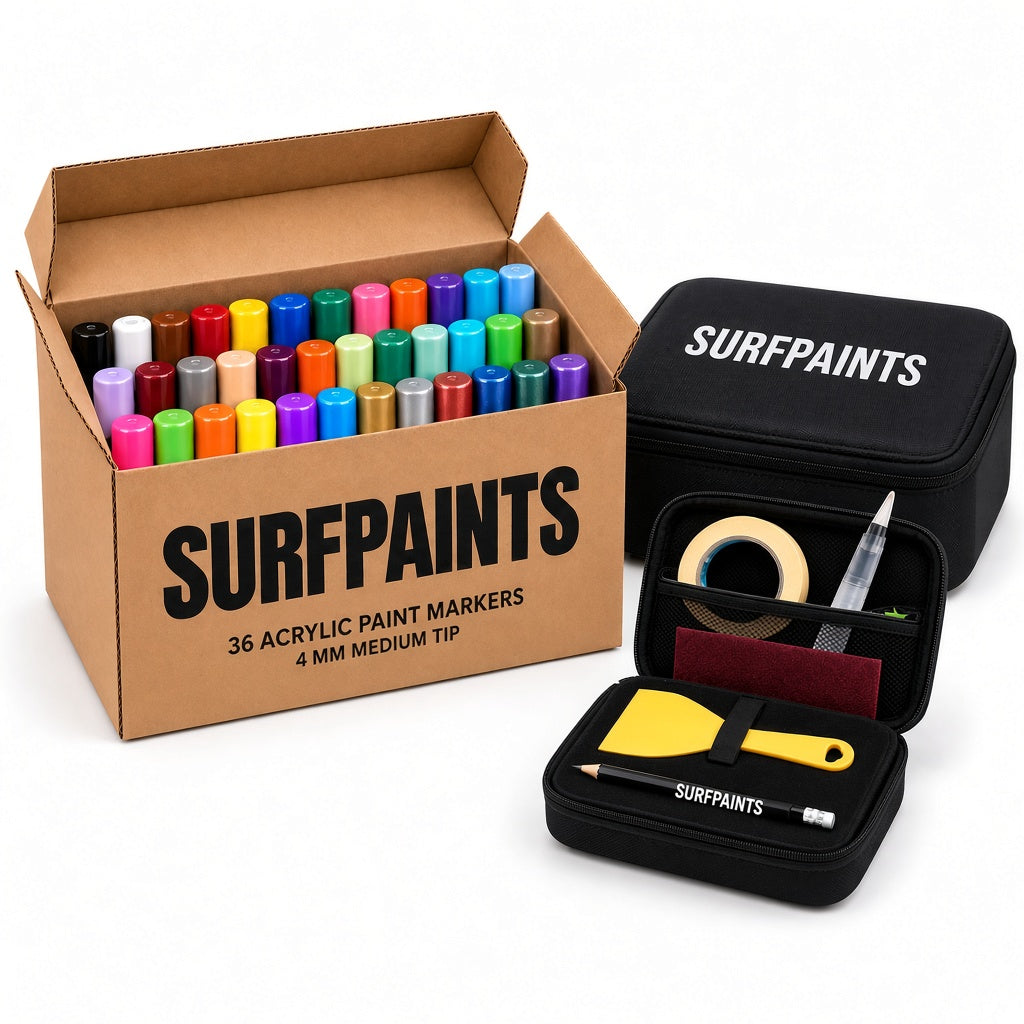
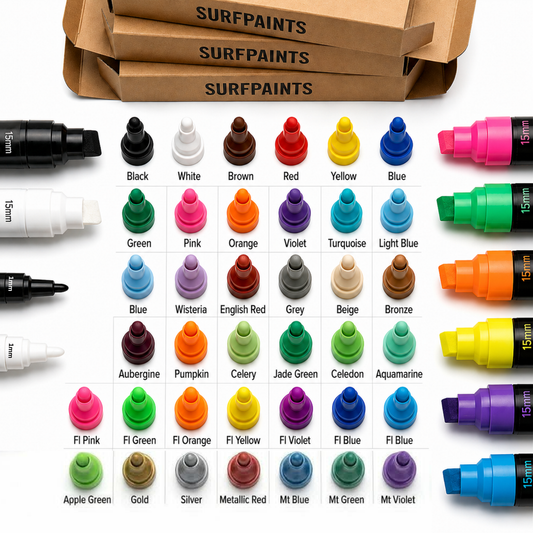
| 4mm bullet | Outlines, lettering, filling shapes, layering colour | All 8 packs (A$59.99) and the 36-Colour Set (A$199.99) |
| 15mm wide | Backgrounds, bold blocks, large canvases | Fluro 15mm Jumbo 8 Pack (A$79.99), or single 15mm pens |
A white 1mm pen is one of the most useful tools for canvas, because it lets you add highlights and catchlights over any colour.
"I found this white acrylic pen to be perfect for my original art. It covers well and no blobs."
— Kym Breeze, Individual pens (white fine point)
Do you need to prime canvas before using paint pens?
Most store-bought canvases come pre-primed with gesso, and you can paint on them straight away. On raw canvas, or for extra-smooth lines, add a coat of gesso or acrylic primer and let it dry fully. A smoother surface also helps your nibs last longer, because rough canvas weave wears them down faster.
How do you use paint markers on canvas, step by step?
- Sketch lightly in pencil, or transfer your design with tracing paper.
- Shake and prime each pen on scrap paper until the paint flows evenly. Don't prime on the canvas itself, because a first push can release a blob.
- Block in big areas first. Use 15mm or 4mm pens, or a brushed acrylic base if you prefer.
- Let each layer dry before you paint over it. Light colours over dark may need a second coat.
- Add detail last: outlines, textures, patterns and highlights with 4mm and 1mm tips.
- Varnish once the painting is fully dry (see below).
Can you use paint pens over acrylic paint?
Yes, and it's one of the most popular ways to use them. Paint your base in tube acrylics with a brush. Once it's completely dry, use paint pens for crisp linework and detail on top.
"I've just started a 2m x 1m Acrylic panel artwork and couldn't be happier with the results so far, these pens are amazing 😍"
— Therese Beaver
Can you blend paint markers on canvas?
Yes, while the paint is still wet. Lay two colours next to each other, then soften the join with a damp brush or a water brush, which comes in our storage case. You can also go pen-to-pen. Our blending guide shows a few techniques.
Do you need to varnish paint pen art on canvas?
It's optional on canvas, but a clear acrylic varnish evens out the sheen across the painting and gives the surface a protective layer. Let the painting dry fully first, then follow your varnish maker's instructions. Our sealing guide explains the options.
Which Surfpaints set is best for canvas artists?
- Trying them out: one 8 pack in your palette (Primary, Pastel, Earth, Metallic, Black & White or Fluro), plus a white 1mm pen for highlights.
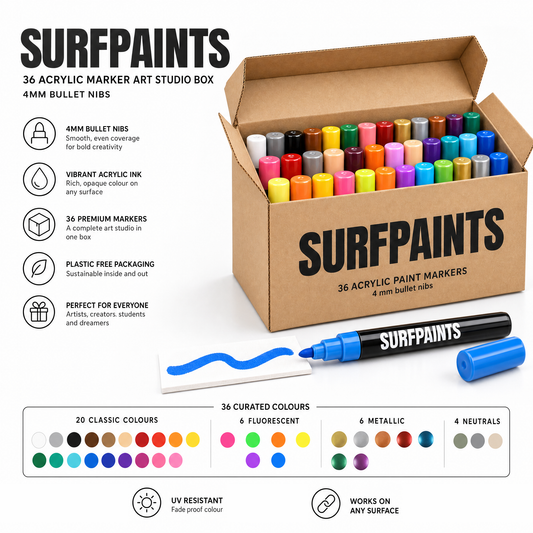
- Serious painters: the 36-Colour Set, with core, pastel, fluorescent, earth and metallic shades in one box.
- Studio setup: the Studio Kit, which adds a storage case, spare nibs, a water brush and more.
Who it's not for: if you mainly want very fine colour lines (under 1mm) across lots of colours, keep in mind that our 1mm pens come in white and black only.
"I had not used these very much in my artwork for a while, but once I started using them, I am hooked on the extra depth of detail that I achieve in each piece when using them. So very happy with my purchases."
— Ms. Helen Langford, Pastel 8 Pack
How do you get opaque light colours over dark paint?
Light acrylic colours like yellow, pink and pastels are naturally less opaque than dark ones. Painters use two tricks: paint a white underlayer first and let it dry, then go over it with your colour; or apply two thin coats instead of one heavy one. Thin coats dry faster and give a flatter, more even finish than one thick layer.
What causes common problems with paint markers on canvas?
- Scratchy, broken lines: the canvas weave is too rough. Add a coat of gesso, or switch to a canvas panel for fine work.
- Lifting the layer underneath: the paint below isn't fully dry, or you're scrubbing back and forth. Let it dry and use single, light strokes.
- Nib picks up the colour underneath: wipe the tip on scrap paper until the colour runs clean.
- Uneven sheen between pen and brush areas: one even coat of varnish over the whole painting fixes it.
Should you use an isolation coat before varnishing?
Many fine-art painters do. An isolation coat is a clear acrylic layer that stays on under the varnish (often a thinned gloss medium) brushed or sprayed over the finished painting before the final varnish. It evens out the surface, so the varnish goes on uniformly. If you brush it on, wait until the paint pen layers are completely dry, and use light strokes so you don't drag the colour. Test on a scrap first.
Frequently asked questions
What are the best paint markers for canvas?
Look for opaque, water-based acrylic paint markers with a choice of tips: fine for detail, medium for most work and wide for fills. Surfpaints come in 1mm, 4mm and 15mm tips, and the 4mm range has 36 colours.
Can you use paint pens on canvas without gesso?
On a pre-primed canvas, yes. On raw canvas, prime it first. Otherwise the fabric soaks up paint and the lines can look patchy.
Are paint markers good for portraits and pet portraits?
Many artists use them for details like eyes, fur and hair highlights over a painted base. As one customer put it: "Just what i needed to add some fine detail to my latest pet portrait." (Brad Vincent, Primary 8 Pack)
Can I use paint pens on canvas shoes and tote bags?
Yes. Fabric and shoes need different prep and sealing, though. See how to paint shoes with paint pens and our fabric, denim and leather guide.
Why is my paint pen blobbing on canvas?
That usually means it was over-primed, or the nib was pressed down hard on the canvas. Prime on scrap paper and use light pressure. Here's how to start a paint pen properly.
Do you ship to the USA and Canada?
Yes. Orders are sent with Australia Post and usually arrive in 4–8 business days.